Expressvpn Glossary
Web-based application

What is a web-based application?
A web-based application is software delivered over the internet that runs on remote servers and is accessed through a web browser. It allows users to perform tasks, input data, and interact with content without installing the software locally on their device.
How does a web-based application work?
A web-based application uses a client-server model, where the user’s browser acts as the client and a remote server hosts the app’s data and core logic. When a user interacts with the app, the browser sends a request to the server. The server processes the request, generates a response, and sends it back to the browser, which renders it for the user.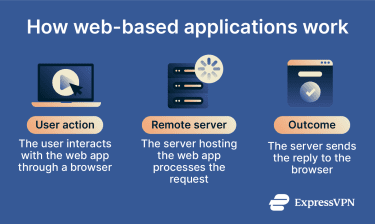
Types of web-based applications
There are many types of web-based apps, with common examples including:
- Single-page applications: Load once and dynamically update content without reloading the page for each interaction.
- Progressive web applications: Combine standard web functionality with an app-like experience, supporting home screen installs, offline access, and push notifications.
- Static web applications: Deliver pre-built content with minimal interactivity and rare updates, such as portfolios or landing pages.
- Dynamic web applications: Use backend logic and databases to update content in response to user interactions.
- Content management systems (CMS): Allow content to be created, edited, and published without requiring direct code changes.
Benefits of web-based applications
Web-based applications provide many benefits, such as:
- Cross-platform compatibility and accessibility: Users can access the application from devices with a web browser and an internet connection.
- Cost efficiency: Reduce development and maintenance costs by using a single app across multiple platforms.
- Automatic updates: Updates are deployed on the server, so users always access the latest version.
- No installation required: Allow access without downloading or installing software in most cases.
- Real-time collaboration: Multiple users can access and update shared data simultaneously.
Where is it used?
Web-based apps are used across many industries, with common use cases including:
- Finance: Digital payments, transaction management, and online purchasing.
- Productivity: Document editing and sharing, task and project management, and shared calendars.
- Communication: Instant messaging, video conferencing, virtual meetings, and email tools.
- Entertainment: Video and audio streaming, online games, and social media platforms.
Limitations and security concerns
While web-based applications provide flexibility and accessibility, their performance and full functionality depend on a stable internet connection, which can limit use in low-connectivity environments.
Also, because they’re accessible over the internet and typically store data on centralized servers, they may also be exposed to remote security threats and exploitation of software vulnerabilities, such as cross-site scripting (XSS).
Plus, since they usually store and process user data on centralized servers, this can raise concerns about how personal information is collected, stored, shared, and protected.
Further reading
- How does the internet work?
- What is TLS encryption, and how does it protect your data?
- HTTP vs. HTTPS: How to choose the secure option for your site
- What is a cyberattack? Understanding the basics