Expressvpn Glossary
Sextortion

What is sextortion?
Sextortion is a form of extortion that involves intimate images or videos of the victim. The cybercriminal usually claims that unless the target sends money, they’ll share the material with the victim’s friends and family.
How does sextortion work?
Sextortion usually starts with a cybercriminal making fake profiles on social media or dating sites. Some even impersonate people that the victim already knows. Either way, once they’re in touch with the victim, the cybercriminal strikes up a conversation and may eventually share adult photos supposedly of themselves. At some point, they may ask the target to send similar images or videos in return.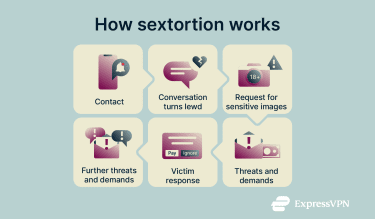
Before long, the blackmailer reveals their true intentions. This could take place on the same channel where earlier chats occurred, or using a separate platform like email or social media. They demand money (usually cryptocurrency) in exchange for a promise not to share the compromising images. If the cybercriminal has gathered enough information, they may mention the names of friends or family members in their threats.
In many cases, the scammers don’t actually have any intimate images or videos of the target. Many simply send out messages en masse claiming to have hacked the recipient’s webcam without providing any evidence.
Why is understanding sextortion important?
Sextortion can have devastating consequences:
- Emotional and psychological impact: Victims of sextortion often experience severe emotional distress, involving feelings of fear, shame, anxiety, and isolation. This can lead many targeted by the scam to take rash action.
- Financial loss: Blackmailers usually demand money or gifts in exchange for promises not to share whatever they’ve collected. Often, they continue to make threats for an extended period of time.
- Privacy and data exposure: Sextortion is a major violation of a person’s privacy and may result in significant social repercussions if data is shared.
Understanding how sextortion works is crucial for recognizing early warning signs and preventing further harm. By knowing the typical tactics used by scammers, such as creating a false sense of urgency, emotional manipulation, or pretending to be someone trustworthy, individuals are better equipped to identify red flags before becoming victims. Awareness also helps reduce the stigma that keeps many silent, empowering victims to seek help, report the crime, and support others who might be vulnerable.
Where does sextortion occur?
Sextortion is a global phenomenon and can affect victims of any age. It’s most often perpetrated on dating apps, chat platforms, and social media networks. New technologies like AI and deepfakes are making sextortion even more complex and dangerous, so extreme caution is warranted.
Further reading
- Cyber extortion: What it is, how it works, and how to protect yourself
- What to do if you’re a victim of revenge porn
- WhatsApp scams: What they are and how to stay safe
- Online dating scams: 11 warning signs and how to outsmart them
- Are dating apps safe? Protect your privacy and stay secure
FAQ
What should I do if I’m a victim of sextortion?
Experts generally recommend immediately ceasing communication with anyone threatening extortion. Even if paid, cybercriminals often continue to extort victims, so complying is no guarantee of retaining one’s privacy. It’s important to report any accounts perpetrating the scam to the platform being used and to consider alerting law enforcement.
How do sextortionists usually operate?
Many sextortionists use fake profiles on dating apps and social platforms to trick their victims into sharing intimate content. Eventually, they reveal their true intentions and make threats. The scam exploits a target’s fear of exposure and sense of shame in order to make money. This can often turn into a long-term scheme, with repeat payments demanded indefinitely.
Can sextortion be traced and reported to authorities?
Yes, sextortion is a crime and should be treated as such. Reporting the blackmailer’s account is a good first step and alerting the police may also be advisable. Prosecuting cybercrime can be difficult, but many law enforcement agencies have access to tools that may be able to bring offenders to justice.