Expressvpn Glossary
Data entry

What is data entry?
Data entry is the process of inputting information into a computer system or database, often from paper documents, forms, or other sources. It can involve typing, scanning, or selecting data to ensure it’s recorded accurately and consistently. Data entry can be manual, automated, or a combination of both.
How does data entry work?
Data entry tasks can take multiple forms, including:
- Typing numerical, alphabetical, or alphanumeric characters into a database.
- Transcribing documents and entering them into a database.
- Updating existing databases with current information.
- Importing data from one database to another.
- Scanning documents and converting them into a digital format.
Why is data entry important?
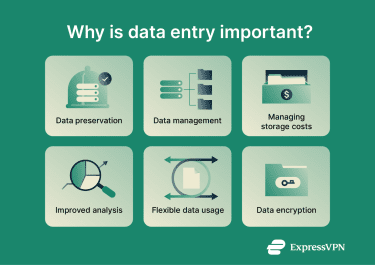 Some of the core benefits of data entry include:
- Data preservation: Moving data from physical formats (such as paper) into digital records can help preserve the data for longer into the future.
- Data management: Storing information in an organized digital format makes it easier to search, retrieve, and access.
- Managing storage costs: Data entry can help reduce data storage costs, especially as cloud storage doesn’t generally cost as much as physical storage facilities.
- Improved analysis: Digitized data can be analyzed faster, using AI tools to extract insights for quick decision-making.
- Flexible data usage: Physical files can only be used once at a time (unless physical copies are made), but digital data can be simultaneously accessed by multiple users.
- Data encryption: It’s easier to encrypt and protect data once it’s been converted into a digital format.
Where is data entry used?
Data entry is used in many industries, including:
- Healthcare: The digitization of patient records allows multiple medical personnel to collaborate or work on patient files from anywhere.
- Retail and e-commerce: Physical product data (including pricing, inventory levels, discount offers, etc.) is entered into online shopping databases.
- Accounting: Physical invoices, receipts, bill orders, and other essential documents are digitized for preservation and easy reference.
- Human resources: Data entry helps with management of employee data, resumes, and payroll processes.
- Government agencies: Helps to maintain digital records of documents, including tax forms, court rulings, and patents.
- Marketing: Used to collate and centralize customer and prospective lead data from online surveys, physical datapoints (such as in-store surveys), and other sources.
Further reading
FAQ
What exactly is a data entry job?
A data entry job involves digitizing, sorting, and organizing data from multiple sources into one centralized digital source. A data entry job can be carried out manually (by a data entry clerk), using automation tools, or via a hybrid of both methods.
What are the skills for data entry?
Data entry jobs require fast typing skills, attention to detail, and proficiency with data entry tools like Microsoft Excel and Google Sheets. Familiarity with automated data entry systems and software and strong organizational skills are also important.
What is an example of a data entry job?
Examples of data entry jobs include digitizing hospital patient records from paper files, entering data from physical invoices and bills into accounting software, or logging physical inventory in a relevant software program.
How can I start data entry?
A degree is not required to begin working in data entry. Essential requirements include fast typing skills, attention to detail, and computer proficiency. Some industries, such as healthcare, may require specialized knowledge for data entry roles.